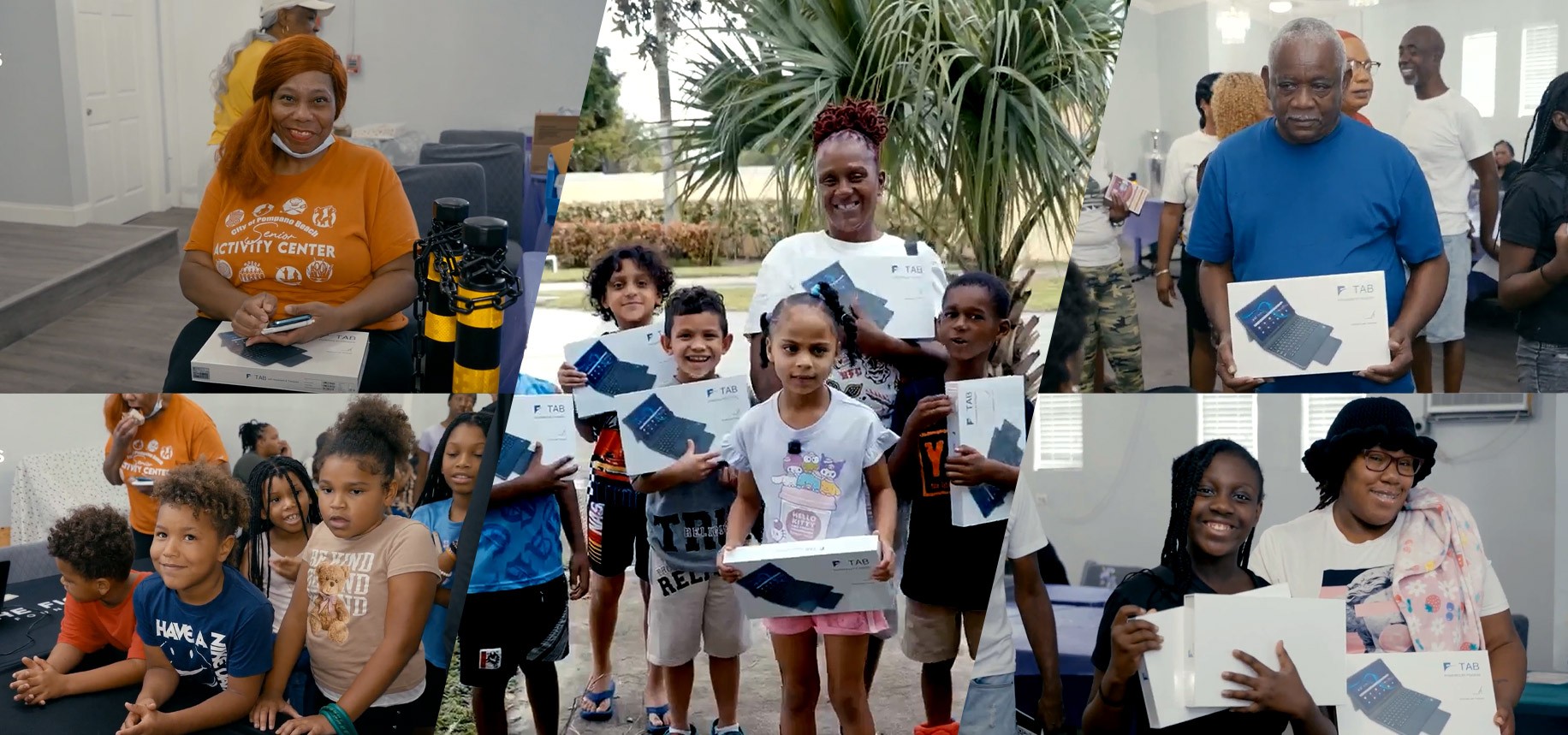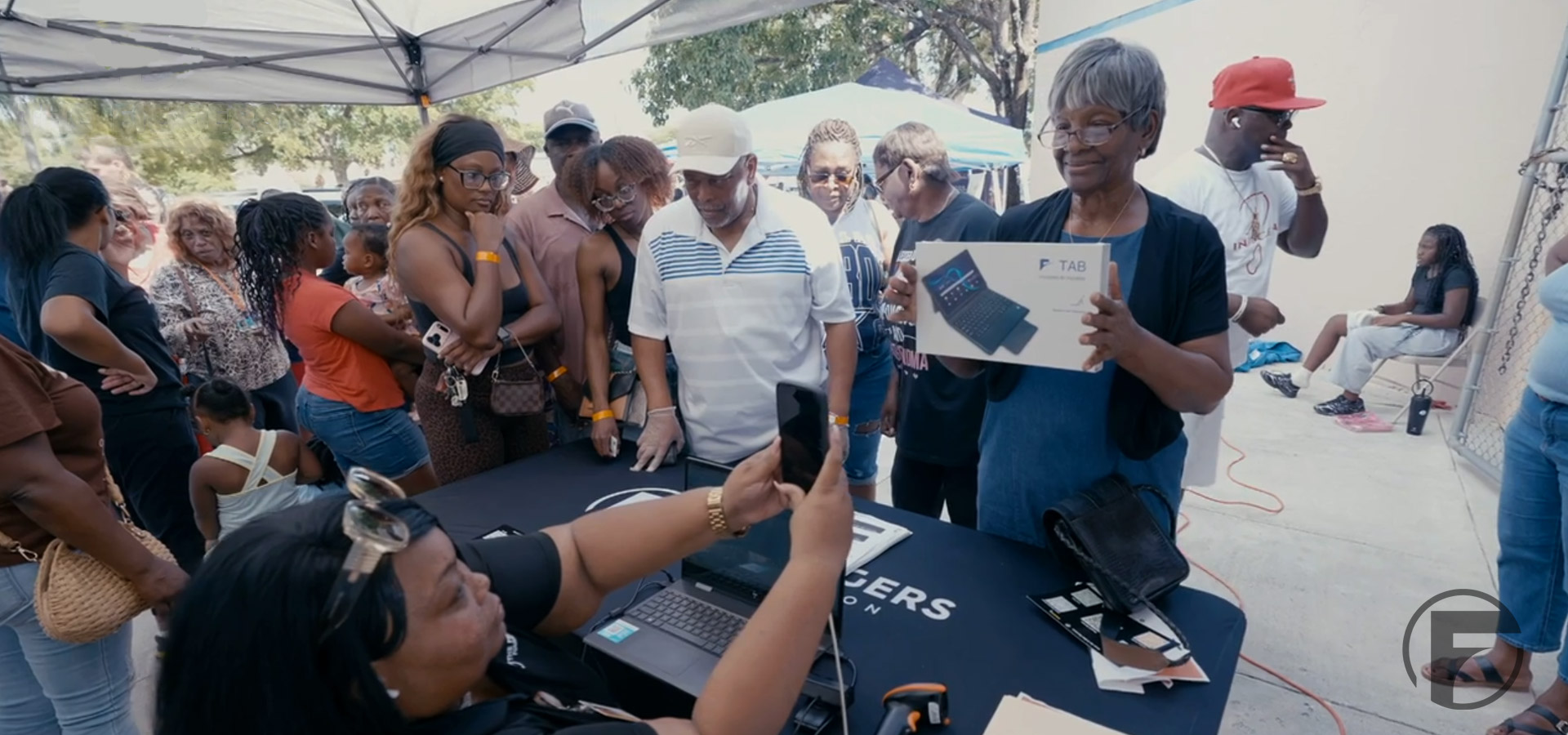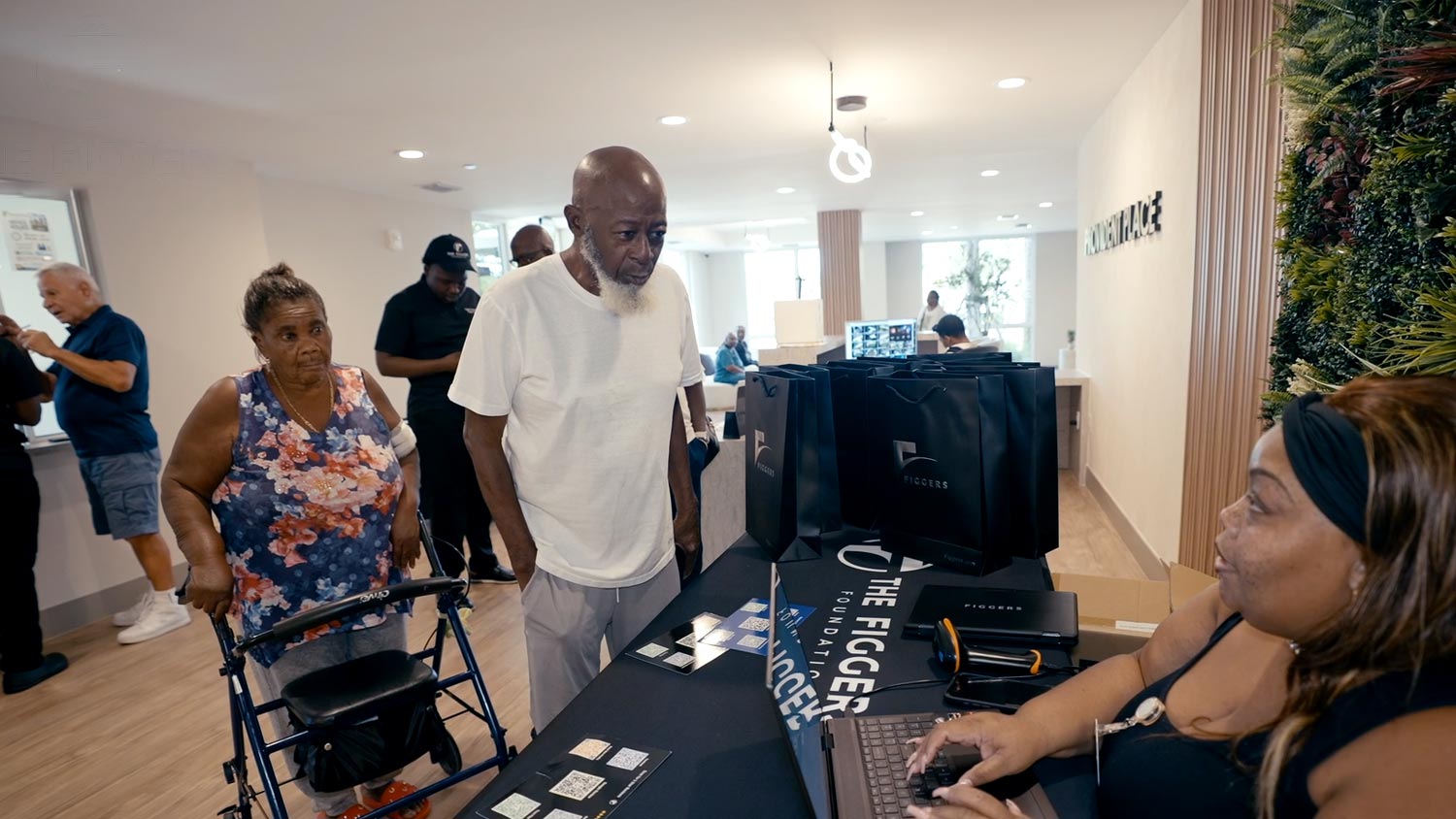


On September 24, 2026, the doors of Lauderhill Point Community Center in Lauderhill, Florida, opened to a room filled with excited children, parents, and adults as Figgers Foundation partnered with the organization to distribute 300 tablets to local residents.
Bringing Digital Access to a Community Ready to Grow
Home to more than 600 residents, Lauderhill Point Community Center is far more than a community center. It serves as a local resource hub where residents and families can connect with essential support, from food and housing assistance to educational programs, financial resources, and services for people with special needs.
Addressing social challenges in communities across America and around the world is a priority for Figgers Foundation, and the digital divide is one of them. Without access to technology, people can miss out on educational resources, skill-building, and opportunities that increasingly depend on having a connected device.
According to the U.S. Census Bureau, 19.4% of Lauderhill residents live below the poverty line, while the city's median household income is just over $50,000. For families already balancing essential expenses, the cost of a reliable device and internet service can be difficult to manage, potentially making it harder for children to keep up with their education and for adults to pursue work and other opportunities.
Recognizing the needs of residents and Lauderhill Point Community Center's efforts to serve them, Figgers Foundation worked with the organization to expand access to technology for the people who need it most.
Helping Families Unlock New Opportunities Through Technology
With more than 60% of Lauderhill Point Community Center’s residents being children, Figgers Foundation saw a chance to give the next generation better access to technology. The tablets give students another way to study, explore educational content, and access knowledge beyond the classroom.
For Nataya, who received four tablets for her children, the donation meant giving each of them a device of their own. Here's what she had to say about receiving them:
“My name is Nataya, and we're going to be using the tablets for school needs because I have four kids. They do reading and math, and they'll be able to use different programs online.”
Although the initiative was primarily aimed at children, the 300 tablets were not distributed exclusively to them.
The same tablets can also give parents and other adults access to the digital tools they need to learn, build their skills, search for jobs, complete applications, and access important services online.
Lance Edinburgh, the Community Service Coordinator at Lauderhill Point Community Center, who helped with the distribution, spoke briefly about the center's partnership with Figgers Foundation and its work in the community.
“Figgers Foundation is a great foundation. I invite everyone to do their research on them. They help at-risk families, help free people from incarceration, and help formerly incarcerated people get back into the community. They're working with everybody.”
Building a Future Where Access Isn't a Barrier
For many, a tablet may seem like just another piece of technology, but for others, it can be the tool they need to study, search for work, communicate, or access healthcare and other essential services.
and communities from moving forward by giving them access to the support and resources they need. The work goes beyond a single donation or community, spanning education, technology, healthcare, and other essential services that can help people build more stable and connected lives across the United States and around the world.
We sincerely thank Lauderhill Point Community Center, its Community Service Coordinator Lance Edinburgh, Figgers Foundation Director Santay Thompson, and all the volunteers who helped make this distribution possible.
The partnership with Lauderhill Point Community Center is part of a broader effort by the Figgers Foundation to make technology and education more accessible to communities that might otherwise struggle to afford them. Through its Florida Connect device loaner program, eligible residents in 18 Florida counties can receive free devices along with three years of internet service, helping remove some of the barriers that can make staying connected difficult.
That work extends beyond the United States, too. The Foundation has supported schools in Africa and helped keep schools running in India, bringing the same focus on access to communities far beyond Florida. For the Foundation, where a person lives should not determine whether they have access to the tools they need to learn, work, and stay connected. The Lauderhill distribution is another example of that idea taking shape in a local community.